By AJ Gill, Partner and MNP’s Director of Agriculture Risk Management Resources
For more great articles like this one, visit https://www.mnp.ca/en/insights.
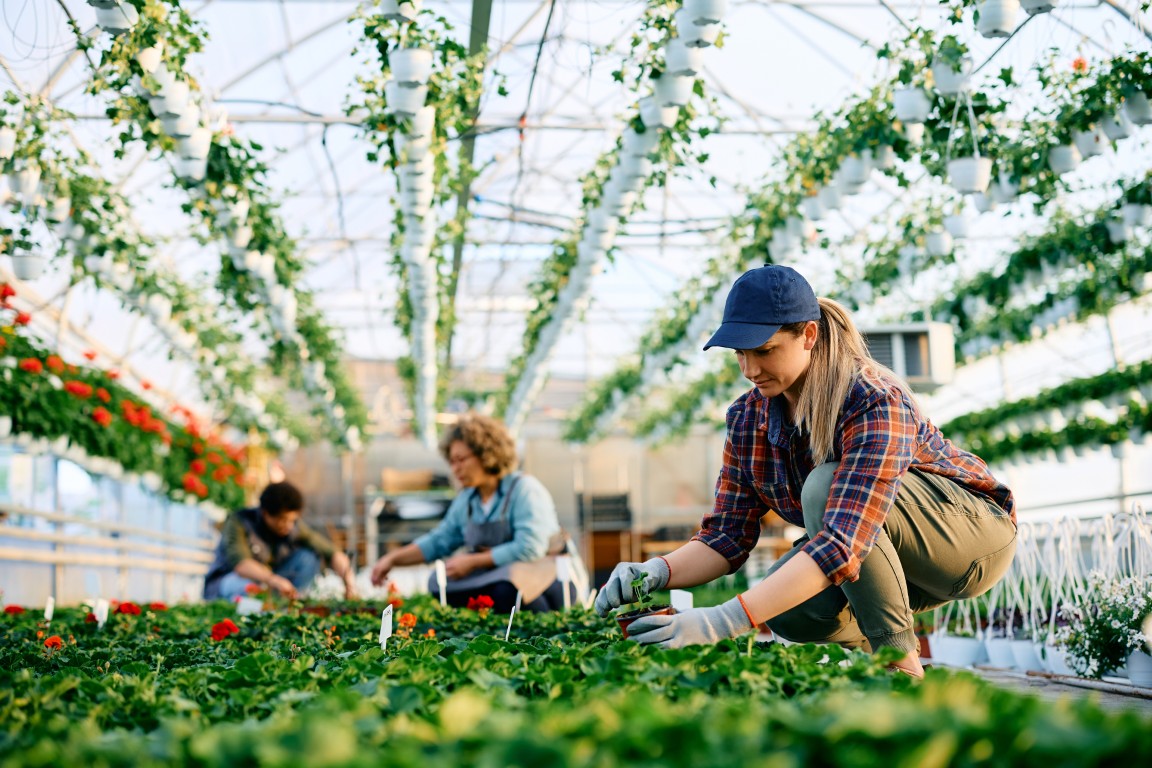
Greenhouse growers operate in one of the most sophisticated environments in Canadian agriculture, where controlled climates and high-value crops create opportunity but also increase exposure when issues arise. Costs are harder to absorb, and missteps carry greater consequences in operations built on technical systems and high fixed investments. In greenhouse operations, these pressures tend to concentrate across six core areas of farm risk:
- Production
- People
- Finance
- Business environment
- Management
- Markets
While these pillars appear across all farm types, their impact is often stronger inside a greenhouse. Clear, reliable data helps you understand how each one affects your operation and where your exposure is greatest.
Production: Higher stakes without traditional safety nets
It’s easy to assume a controlled environment reduces exposure, but pests and disease remain major threats. A single outbreak can force you to restart an entire crop cycle. Unlike field growers, greenhouse producers don’t have access to traditional crop insurance programs, which increases your vulnerability when losses occur. Global pressures such as extreme weather and resource strain also influence production through heating demands and input availability. Building what-if scenarios goes beyond measuring loss by helping you understand how much disruption your operation can absorb before decisions around financing, labour, or production timing need to shift.
People: Technical labour and personal pressure
Greenhouse operations are highly technical, making skilled labour difficult to recruit and retain. Staffing shortages can interrupt production or limit your ability to scale. The mental strain of managing tight margins and constant decisions can also take a toll. Improving your financial literacy helps you interpret your statements, understand your risk position and make choices with greater clarity. When this expertise is missing internally, working with an experienced advisor can help translate complex information into practical decisions and reduce the pressure that comes with constant uncertainty.
Finance: Tight margins and the need for visibility
Heating, labour and input costs leave very little room for error. Benchmarking helps you compare expenses to industry averages and identify areas of concern early. Reliable operational and financial data improves how decisions are made by showing how your costs shift through the season.
Scenario planning provides insight into how different challenges affect your operations. The Ag Risk Management Projector shows how fixed and variable costs respond to price changes or revenue drops. You can model a production decline and see how risk programs may respond. Programs like the Advance Payments Program can also support cashflow through interest-free financing, but only if you have a clear view of your financial position.
Taken together, this visibility helps growers recognize how quickly a production or market disruption can move from an operational issue to a balance sheet issue.
Business environment: Regulations, resource pressure and market shifts
Compliance continues to grow more complex. Carbon tax rebates, pesticide regulations and cross-border plant movement all require consistent documentation and timely reporting. Imported plants may introduce pests or diseases that are more difficult to control in Canada. Broader environmental pressures such as biodiversity loss and natural resource shortages can affect your input availability and business continuity. Market access can also move quickly. Even a modest tariff change can influence cashflow if you supply the U.S.
Management: Succession and long-term planning
Succession remains one of the most significant management risks. The average Canadian farmer is now 58 years-old, and according to RBC, 66 percent don’t have succession plan as 40 percent are expected to retire within 10 years. For operations with high capital costs and specialized expertise, a clear succession plan protects stability and reduces vulnerability when technical knowledge or leadership changes unexpectedly.
Markets: Staying prepared for rapid change
Greenhouse growers remain exposed to price swings, shifting demand and trade-related impacts. Understanding how these conditions influence your financial performance helps you make informed decisions about pricing, contracts and production volumes before market shifts force reactive decisions.
Strengthening your operation for what comes next
Being prepared before issues arise gives you more room to respond as conditions change. A 2020 Farm Management Canada report found that nearly 90 percent of farmers say having a written business or risk plan improves their peace of mind. For many growers, having a plan in place can also take some of the pressure out of the day-to-day. MNP’s Agriculture Risk Management Resources (ARMR) team works with greenhouse growers to build practical, operation-specific risk plans that strengthen decisions and long-term stability.
If you would like support developing a risk plan tailored to your operation, the MNP ARMR team is ready to help. Visit www.MNP.ca for details.

About AJ Gill
AJ Gill is a Partner and MNP’s Director, Agriculture Risk Management Resources, supporting the firm’s agriculture advisors across Canada. Based in Kelowna, AJ is a seasoned leader with a lifelong passion for helping farmers. He moved to Canada from India in 1988 and grew up in a farming family. His hands-on agricultural background has given him deep insights into farmers’ issues, challenges, and opportunities.
With nearly two decades of experience in the federal and B.C. governments, AJ was instrumental in the transfer of the federal government’s AgriStability program to the B.C. Ministry of Agriculture. He previously represented the Province of B.C. on the National Program Advisory Committee, providing advice to federal, provincial, and territorial governments on the delivery of the AgriStability and Agri Invest programs. His most recent role before joining MNP was General Manager, B.C. Ministry of Agriculture. AJ is a strong believer in giving back to the community. He is a founding director of the Hope and Heal Foundation, established in his mother’s memory. AJ sits on the B.C. Cancer Foundation Advisory Committee and on the Kelowna General Hospital (KGH) Foundation board and chairs the KGH Foundation’s Strategic Development Committee.

About MNP
National in scope and local in focus, MNP supports agriculture businesses with accounting, consulting, tax, and digital services in more than 150 communities across Canada. Founded in Brandon, Manitoba in 1958, we are proudly Canadian and deeply connected to the rural communities we serve.
Our Agriculture advisors bring firsthand industry experience—many are from farm families or actively involved in farming today. That lived understanding, combined with strong technical expertise, allows us to deliver practical, made‑in‑Canada strategies tailored to the realities of agricultural operations.
We work alongside primary producers, agribusinesses, and food and beverage processors, as well as governments and industry organizations, to help clients navigate change, manage risk, and build long‑term value. Learn more about our agriculture‑specific service offerings above.